

It’s a heavyweight matchup between the two VPN giants: ExpressVPN vs. NordVPN. They are the Godzilla vs. Kong, Gates vs. Jobs, or Packers vs. Bears of the VPN world. Both offer some of the fastest, most secure, feature-rich services on the market. So which should you choose?
NordVPN might be cheaper in the long-term and it offers more servers, but ExpressVPN has a better privacy record and more consistent access to streaming services. While both are neck and neck, I recommend NordVPN for most folks. It’s our pick for best VPN overall due to its unrivaled feature set, blazing-fast speeds, and excellent streaming support. That’s not to take anything away from ExpressVPN which is also an exemplary choice. The differences are nuanced so let’s break it all down in more detail below to help you choose the best VPN for your own needs.
ExpressVPN vs. NordVPN: Features compared
| ExpressVPN | NordVPN | |
| Server network | 3,000+ servers, 105 country locations | 7,400+ servers, 118 country locations |
| Simultaneous connections | Up to 14 | 10 |
| Average speeds | 71% of base download, 80% of base upload | 75% of base download, 81% of base upload |
| Protocols | OpenVPN, IKEv2, Lightway, Lightway Turbo | WireGuard (NordLynx), NordWhisper, OpenVPN, IKEv2/IPsec |
| Available platforms | Windows, MacOS, Android, iOS, iPadOS, Fire TV, Apple TV, Linus, Browsers, Routers | Windows, MacOS, Android, iOS, iPadOS, Fire TV, Apple TV, Linus, Browsers, Routers |
| Business location | British Virgin Islands | Panama |
| Cost (base price only) | $12.99 per month, $74.85 for the first year, or $97.72 for the first two years | $12.99 per month, $59.88 for the first year, or $83.43 for the first two years |
Best for speed: NordVPN
In my testing, both NordVPN and ExpressVPN ranked with stellar speed scores. Along with Hotspot Shield they’re the fastest VPNs available. While all VPNs will slow down your internet speeds to some degree, these two slow it down the least.
In my latest tests, ExpressVPN resulted in an average of 70 percent of the base internet speed for downloads and 80 percent of the base for uploads — with a slight bump on most servers if you utilize the new Lightway Turbo protocol. NordVPN nosed it out, though, with 75 percent of the base download speeds and 81 percent of the base upload speeds. Those are pretty close margins and you likely won’t see much of a difference in your everyday usage. For what it’s worth though, NordVPN has consistently had the fastest speeds of any VPN for a few years running now.
Whichever one you choose, you can expect it to handle bandwidth-heavy tasks, such as gaming and 4K streaming, with ease. However, the winner for speed—by the slimmest of margins—is NordVPN.
Best for cost: NordVPN
ExpressVPN used to have only one subscription tier for the longest time. That’s all changed thanks to the recent overhaul of its pricing model. Now, ExpressVPN offers three subscription tiers: Basic, Advanced, and Pro. The Basic plan gives you access to just the VPN with 10 simultaneous connections and ad-blocking. The Basic subscription costs $12.99 per month, $74.85 for 1-year, or $97.72 for a 2-year plan.
The Advanced adds two extra connections, tracker-blocking, and a password manager. An Advanced subscription costs $13.99 per month, $89.85 for 1-year, or $125.72 for a 2-year plan.
The Pro plan adds an additional two connections (up to 14), identity removal services, and access to your own dedicated IP. A Pro subscription costs $19.99 per month, $134.85 for 1-year, or $209.72 for a 2-year plan plus four extra free months.
NordVPN on the other hand offers four subscription tiers: Basic, Plus, Complete, and Prime. The Basic plan provides 10 simultaneous connections and access to the basic VPN. It runs $12.99 per month, $59.88 for 1-year, or $83.43 for 2-years.
NordVPN’s Plus plan gives you the VPN plus access to malware protection, an ad- and tracker-blocker, a password manager, and data breach scanner. It runs $13.99 monthly, $71.88 for the first year, or $107.73 for the first two years.
The Ultimate plan adds to that 1TB of cloud storage for $14.99 per month, $83.88 for 1-year, or $134.73 for 2-years.
Finally, Nord’s Prime plan adds NordProtect features including access to both its identity-theft monitoring and recovery, credit monitoring, and cyber extortion-protection services. It will set you back $17.99 per month, $107.88 for 1-year, or $188.73 for 2-years.
While in the end, both services charge you similar prices for their monthly subscriptions, but the difference lies in the long-term plans. NordVPN generally provides better value in the mid-to-long term due to their lower average prices on 1- or 2-year plans. However, it should be noted that ExpressVPN has cheaper renewal rates after the initial term expires. The differences are minor, but despite ExpressVPN’s price restructuring, the slight edge still goes to Nord here.
Best for privacy and security: ExpressVPN
Both ExpressVPN and NordVPN are the trend-setters in the industry when it comes to comprehensive and innovative security features. Taking VPNs beyond just anonymizing your internet connection, these two companies have expanded to provide users with an entire suite of security add-ons such as ad- and tracker-blocking, password managers, and more.
If it came down to just total features, NordVPN would win. It offers Double VPN (multi-hop), and Onion Over VPN—both of which are currently lacking in ExpressVPN. In addition, NordVPN also gives its Plus subscription users access to Meshnet file sharing and robust malware protection.
However, many would argue that the main point of a VPN is to maximize privacy and engender trust among users—something I wholeheartedly agree with. And ExpressVPN simply has a better track record of privacy and transparency. While NordVPN has undergone five independent audits in their history, ExpressVPN has undergone 20+—four times as many.


Additionally, while both services offer regularly updated Transparency Reports on their websites, ExpressVPN began publishing them a bit sooner and its reports contain more detail for users than Nord’s reports.
Both services use AES-256 encryption and RAM-only servers to wipe data after each server reboot, thereby increasing data privacy. But ExpressVPN goes even further by using its own signature TrustedServer technology. This system reloads the latest software stack—OS and all—with each reboot, eliminating the chance for bugs and inconsistencies across servers which could lead to vulnerabilities.
ExpressVPN also has a built-in ShuffleIP feature that changes your IP with each site you visit, providing that little bit of extra anonymity and anti-tracking protection. Nord currently doesn’t offer a similar feature.
Despite NordVPN’s Plus plan offering more security features, the unparalleled transparency and privacy features of ExpressVPN give it the edge here.
Best for streaming: Tie
VPNs are mainly used for privacy and security, but they can also be used for entertainment purposes by unblocking geo-restricted content. Whether you’re traveling or just want to access region-locked content using a VPN to spoof your location is a great way to watch all of the content you want no matter your physical location—looking at you, Netflix England’s entire selection of Ghibli movies.
In my testing, both ExpressVPN and NordVPN came through with flying colors when attempting to access streaming services in different locations. They successfully unblocked Netflix, HBO Max, Hulu, Disney Plus, Amazon Prime, and a handful of other services as well.
The differences in streaming performance are so minimal that I can’t even nitpick to justify a winner in this category. As for streaming, it’s a tie between these two services. Both are perfectly capable at unblocking content on every major streaming site and either will serve you well if this is your goal.
ExpressVPN vs. NordVPN: Bottom line
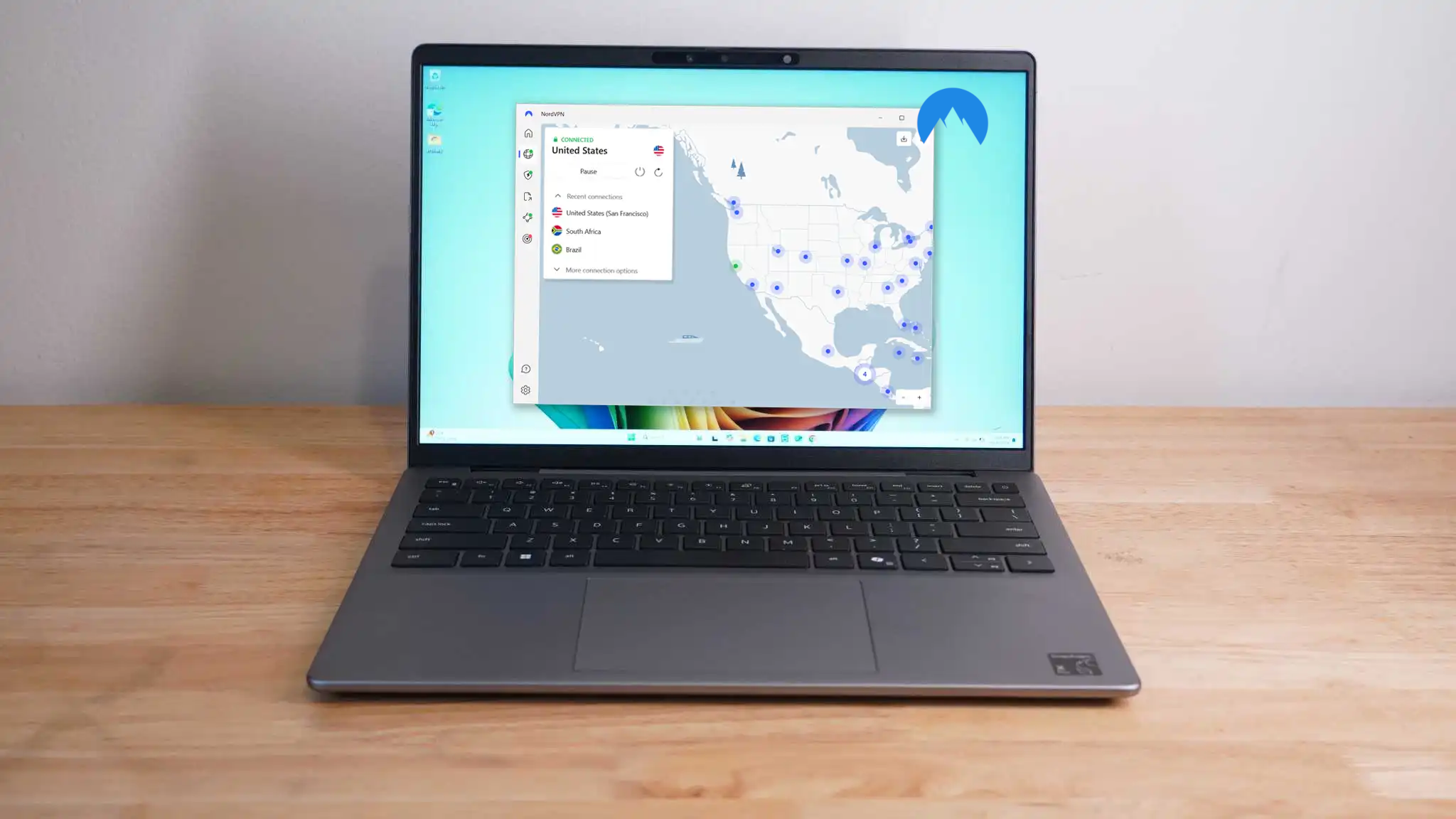
You can’t really go wrong with either of these VPNs. I gave both NordVPN and ExpressVPN 4.5 out of 5 stars in their respective reviews and both garnered an Editors’ Choice award for their outstanding offerings and value. That being said, NordVPN is our pick for best VPN overall and for good reason: It provides excellent security features, unrivaled speeds, terrific streaming capabilities, and great customization options.
ExpressVPN does have a sterling privacy track record and a really clean and easy-to-use interface. But Nord offers rock-solid privacy as well, and with a little bit of time, anyone can use the app comfortably.
Overall, if speed and extra features are your jam then Nord is an easy choice. If ease-of-use and transparency are more important to you then consider ExpressVPN. Still, at the end of the day, whenever someone asks me for a VPN recommendation I usually default to NordVPN first.
Related content
Author: Sam Singleton, Assistant Editor, PCWorld

Sam Singleton is PCWorld's VPN beat reporter and jack of all trades. When he's not on the hunt for the best computer deals he's covering VPNs, productivity software, laptops, and a wide gamut of consumer-grade hardware and software.